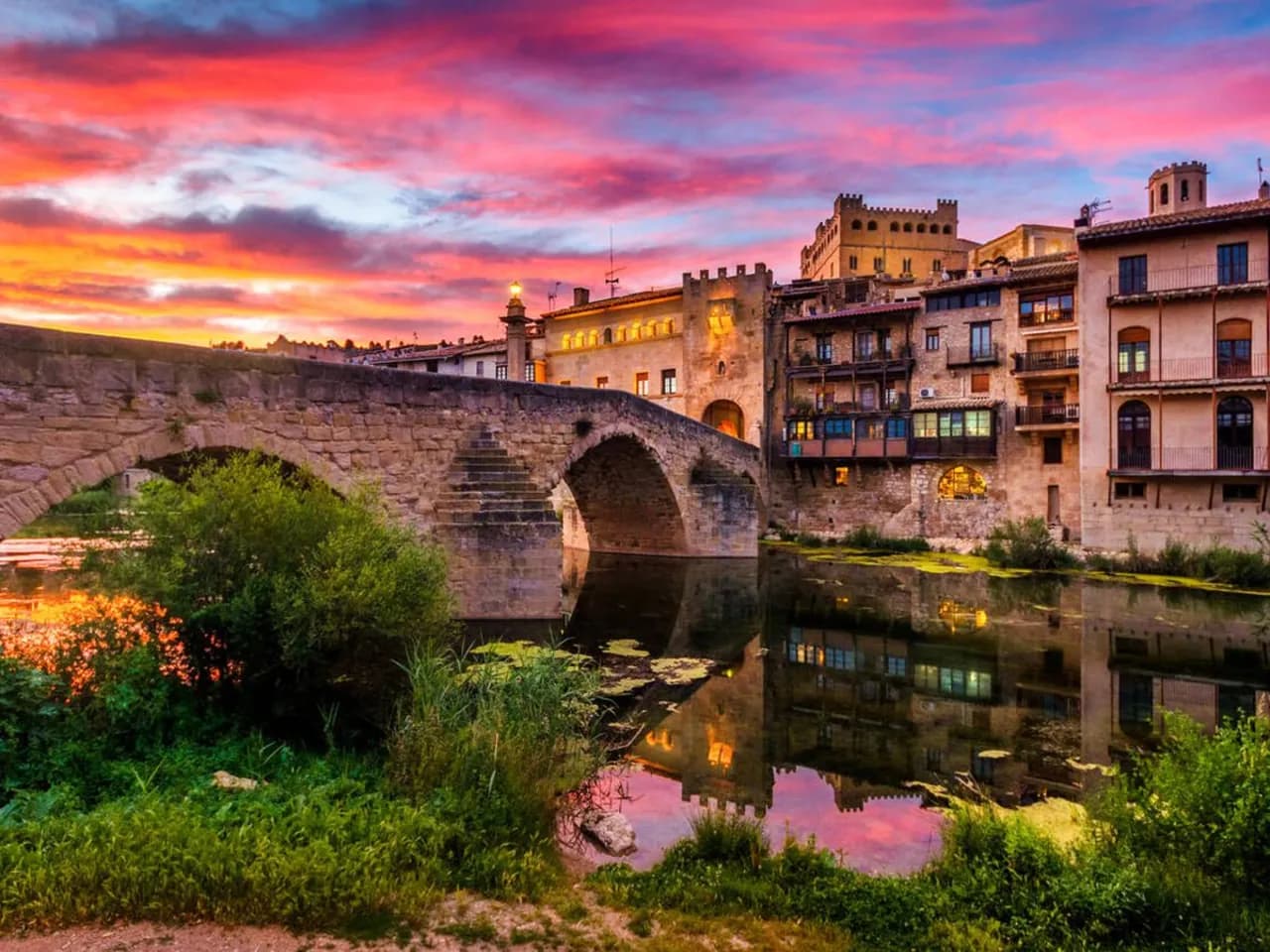
Castle remains
Remains of the original Muslim settlement of Peñarroya on the cerro de la Mola: castle, walls, and watchtowers.
On the cerro de la Mola, currently known as the Capdevila neighbourhood or Lo Castell, lies the original core of the old town of Peñarroya. This settlement already existed in Muslim times when, in the 12th century (1169), Alfonso II, the Christian king of Aragon, conquered the area of the Matarraña valley that had remained under Muslim rule since the 8th century.
It stands in an elevated position, easy to defend, with only two points of access: one from the present-day town, through the now-vanished portal de la Mola, and the other, at the opposite end, across the bridge known as the 'pont Xafat'.
During the early period of Christian conquest, Peñarroya was a hamlet of the Castillo de Monroyo. The Aragonese monarch had great difficulty in populating this territory given its frontier position with the Muslim zone of Morella. For this reason, in 1209, he donated these territories to the Order of Calatrava, and in 1237 the Calatravos of Alcañiz, the main seat of the Order in the area, granted Peñarroya its Carta de Población. In it, they gave the town licence to increase its population and privileges for the construction of the church of Santa María de la Mola and walls in the fortification. Subsequently, in 1337, the town became independent of Monroyo and expanded down the hillside, forming semicircular streets laid out in terraces following the slope of the cerro.
Of that first settlement, only surface remains survive of some of the wall sections that formed the perimeter walls, such as the foundations of two small towers and a possible watchtower. It must have suffered the ravages of wars over the centuries and ended up becoming an abandoned plot as the population spread down the side of the promontory. The last walls were destroyed in the 19th century during the Carlist Wars.
Matarraña · Tourism
Plan your experience
Discover accommodation, local guides and services for your route through Matarraña.