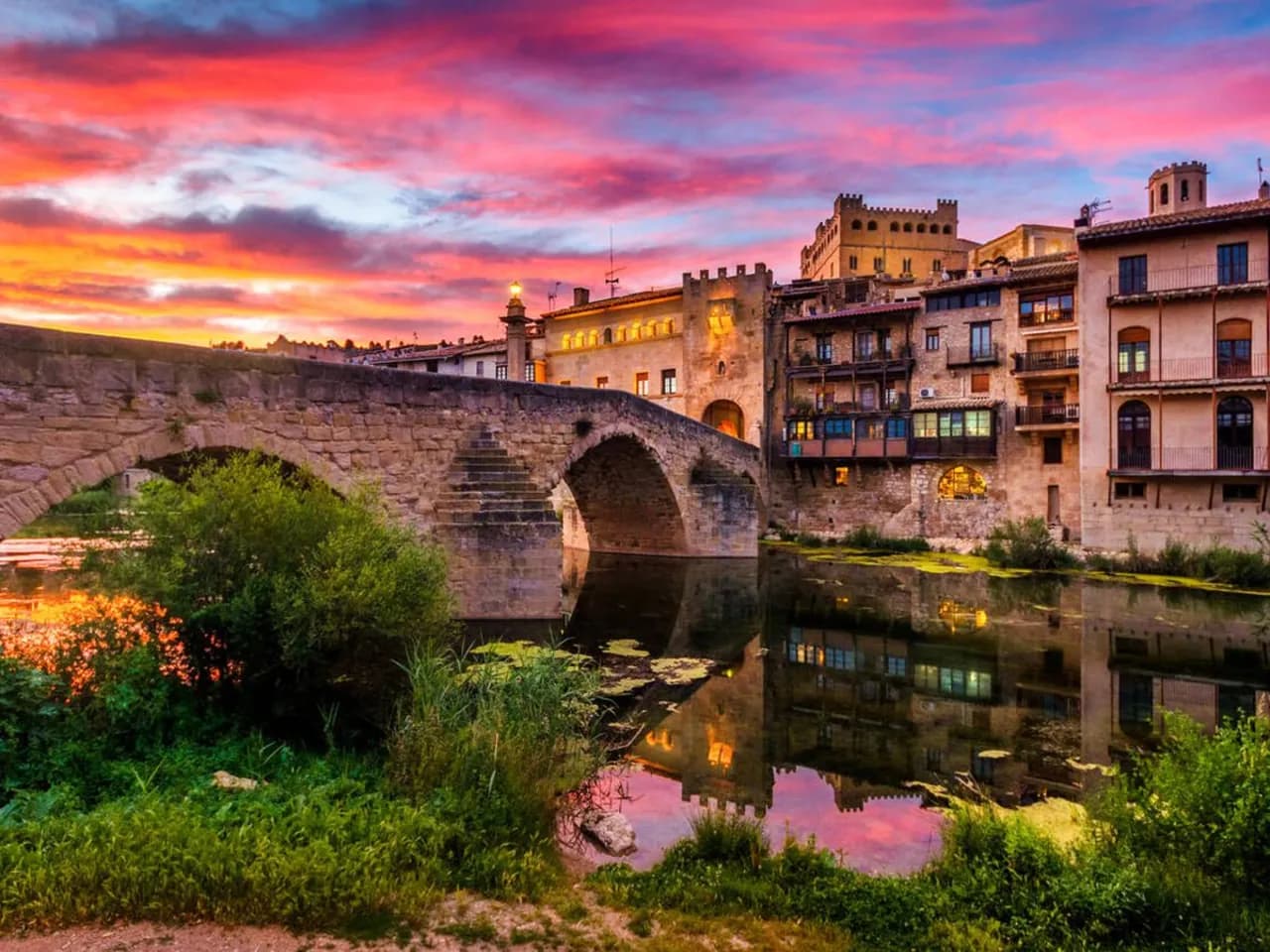
Tossal Redó de Calaceite
Iberian settlement dated to the 7th and 6th centuries BC, located on a small hill 3 km from Calaceite. It features a central street, stone plinths and slabs from the ancient walls. Notable is the discovery of an adobe table and theriomorphic pottery with a possible sacred function.
Location and access
The settlement of Tossal Redó is located about 3 kilometres from Calaceite. To get there, follow the A-1413 road towards Cretas, and after approximately one kilometre take a signposted track that leads to Tossal Redó.
The site
Positioned on a small hill that gives it great visibility and control over the terrain, as well as natural defence, this is a settlement with a central street on either side of which the dwellings are arranged. The stone plinths are preserved, though not the adobe walls that rose above them. Along part of its perimeter, large stone slabs from the walls are still in place. Noteworthy is the discovery of a small adobe table and theriomorphic pottery in one of its rooms, which suggests a sacred function for that space.
This settlement would date from the 7th and 6th centuries BC.
More about the Iberians in Calaceite
To discover more about the Iberian period, you can visit in Calaceite the Museum dedicated to the archaeologist Juan Cabré, located in the historic centre of the municipality. The Museum comprises several rooms: an ethnology room, a temporary contemporary art exhibition room, a room of exhibitions on Juan Cabré, and rooms of exhibitions on the Iberian culture of Bajo Aragón, where a collection of Iberian bronze ex-votos from Jaén and information about the Iberian settlement of San Antonio de Calaceite can be admired. A magnificent set of original pieces from the Iberian, Roman and medieval periods of various origins is on display.
Matarraña · Tourism
Plan your experience
Discover accommodation, local guides and services for your route through Matarraña.