Image gallery of the Stone Bridge and the hermitage of Santa Ana
Images of the bridge over the Matarraña and of the hermitage of Santa Ana, in the district of Beceite.
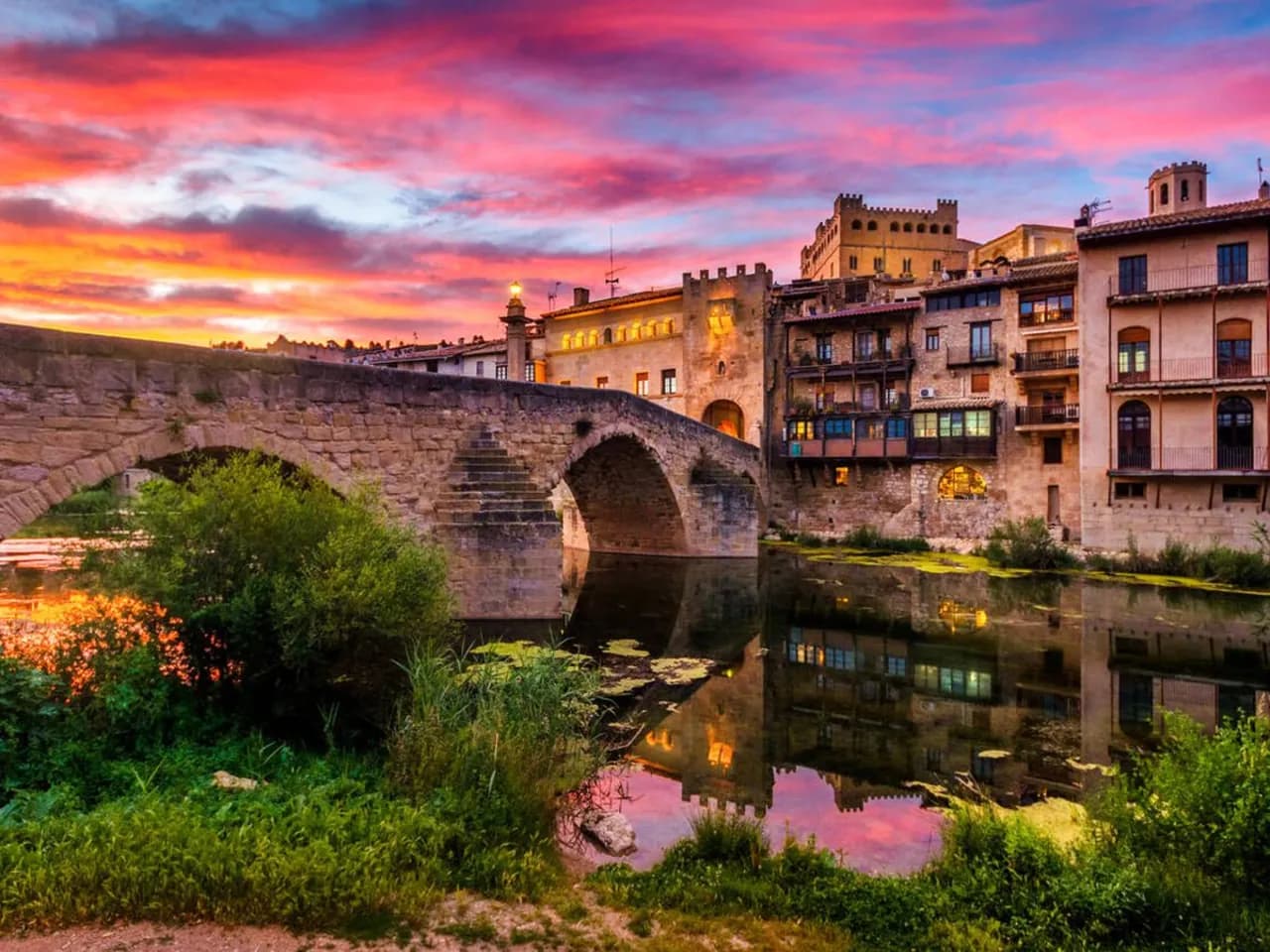
Two heritage landmarks of the bridge district of Beceite, linked from their origin to the extension of the town between the 15th and 16th centuries.
The Stone Bridge of Beceite, erected between the 15th and 16th centuries, represents an essential feat of engineering that marks the first crossing of the Matarraña River from its headwaters. With its imposing single arch and a height of approximately 15 metres, its construction was crucial for the locality.
This bridge not only facilitated transit but also protected the population from being isolated during floods, coinciding with urban expansion and the formation of the Vilanova, Sant Roc and del Pilar neighbourhoods.
Today, and since the construction of the road at the end of the 19th century, it is the obligatory route into Beceite.
More information on the page of the Stone Bridge of Beceite.
At this point, the river descends a significant elevation gain from its course through the Vall del Prat down to the town of Beceite. The force of the water this generates was harnessed to drive the wheels of the various mills along its course: flour mills, olive-oil mills, hydroelectric plants, trip hammers, paper mills, etc.
The river rises in the Puertos de Beceite massif, travels approximately 100 km from south to north and flows into the Ebro River near the town of Fayón, within the Ribarroja reservoir.
In its upper section, the river maintains constant flow of a pluvial regime, and only very rarely a pluvio-nival one. Today, few people have seen the river run dry at this point; only the former workers of the paper mills remember it, when the flow was diverted into the irrigation channels.
After the Spanish Civil War, the pool beneath the bridge, known as “la Cadolla”, was emptied with buckets to recover the weapons that had been thrown into it during the war and to make use of the iron.
Located in the picturesque bridge district, outside the old walls of Beceite, the hermitage of Santa Ana has historically been the welcoming point for travellers arriving along the old road from Peñarroya. Its construction is intimately linked to the extension of the district and to the building of the iconic stone bridge, key elements in the development of the locality.
This hermitage is a notable Gothic-Renaissance construction, built in rough stone between the 15th and 16th centuries. Throughout the 17th and 18th centuries it underwent significant modifications, including the addition of the main nave and an impressive exterior portico in 1699. On the altar, facing west, we find the most interesting architectural details: a polygonal apse with five sides, a ribbed vault, and the figure of the Saint resting on the octagonal shaft of the old ‘Cruz del Molinar’, decorated with trilobed Gothic tracery and images of Apostles, Evangelists, San Miguel and the Pietà.
Santa Ana, mother of the Most Holy Virgin Mary, is the patron saint of women in labour. In Hebrew her name means Grace. In Beceite she is the intercessor for a good death. 26 July is the feast day of the Saint and during the nine preceding days the residents of the Arrabal neighbourhood gather here every night to pray the novena. In former times, the feast was accompanied by various festivities; the heifer runs and dancing completed the commemorations for the Saint.
Today the hermitage is also used for the celebration of weddings and baptisms. The fine appearance and upkeep of the building contribute to its appeal.
More information on the page of the hermitage of Santa Ana.
Images of the bridge over the Matarraña and of the hermitage of Santa Ana, in the district of Beceite.
Both monuments are part of the growth of the bridge district between the 15th and 16th centuries. The bridge allowed safe crossing of the Matarraña during floods, and the hermitage, situated alongside the road from Peñarroya, welcomed travellers arriving at the town.
The two landmarks are connected on foot through the bridge district. The Stone Bridge is freely accessible all year round; the hermitage of Santa Ana is located nearby, next to the old road from Peñarroya.
Matarraña · Tourism
Discover accommodation, local guides and services for your route through Matarraña.